- Toll Free No - 18005714991 / +91 99525 80349

- land Line:
0422 - 2233558 - Mobile No:
+91 99525 80349 / +91 96298 90099
- Mon - Sat: 9am to 7pm
- Sunday:Closed
- Mail us at
- enquiry@asagasagency.com
Blog Details
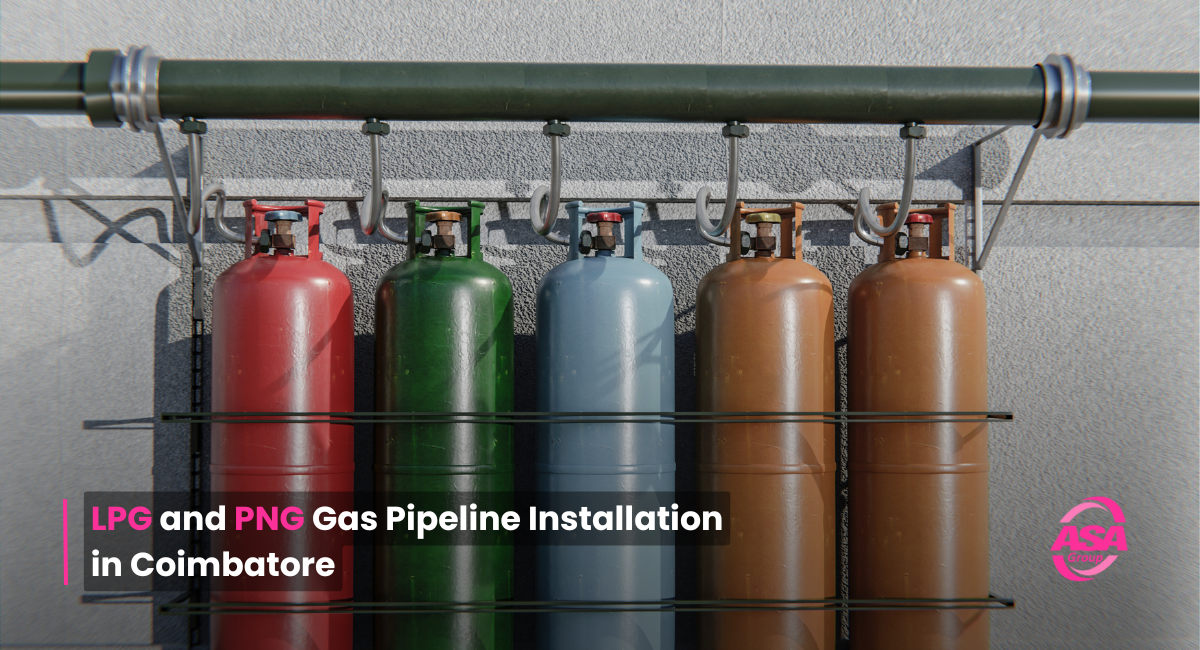
LPG and PNG Gas Pipeline Installation in Coimbatore
2025-06-27
Admin
Introduction
India's journey toward cleaner cooking fuels has been long and evolving. With rising urbanization and increasing awareness of health and environmental benefits, the country is gradually transitioning from traditional fuels like biomass and kerosene to LPG and now, Piped Natural Gas (PNG). But while PNG is growing, its adoption still lags behind LPG. Here’s an insightful look into the latest statistics, growth metrics, and future projections in the PNG vs. LPG debate, especially focusing on LPG gas pipeline installation and LPG gas pipeline installation in Coimbatore.
Current Domestic PNG Usage
As of May 16, 2025, India has achieved 1.47 crore PNG household connections, according to the Union Petroleum Minister. Just a few months prior, in March 2025, PNGRB CGD data cited 1.50 crore domestic PNG connections, meeting nearly 50% of the 3-crore national target.
The progression is notable:
-
October 2023: 1.19 crore PNG households
-
November 2024: 1.36 crore PNG households
-
May 2025: 1.47 crore PNG households
This consistent increase showcases the sector's promising trajectory and highlights the importance of PNG gas pipeline installation in Coimbatore in expanding domestic access.
PNG vs. Population & LPG Usage
India currently has 30 crore households. With 1.47 crore households using PNG, this accounts for only 4.9% of the total population. Consequently, a staggering 95.1% still rely on LPG or other cooking fuels.
-
Urban penetration is stronger for PNG.
-
Nationwide adoption, however, is still below 10%.
This presents a massive opportunity for scaling PNG infrastructure, which could dramatically reduce India's dependency on LPG, improve energy efficiency, and contribute to environmental sustainability. As regions like Tamil Nadu see industrial growth, PNG gas pipeline installation in Coimbatore becomes a strategic necessity.
Following is the graph for these report metrics:

Annual Cost Estimates per Household
LPG
-
Cylinder Cost (non-subsidised): ₹800–1,000
-
Average Refills/Year: 06
-
Total Annual Cost: ₹4,800–6,000
-
Ujjwala Beneficiaries pay approx. ₹503 per cylinder, totaling ₹1,900–2,300 annually
For Detailed listing of LPG Gas Cylinder Prices in Coimbatore
PNG
-
Unit Rate: ₹47–60 per scm (depending on CGD region)
-
Annual Consumption: 240–600 scm
-
Gross Annual Cost: ₹12,000–36,000
-
With 35% Efficiency Saving: Cost reduces significantly
Customized Cost Comparison Table
|
Metric |
LPG |
PNG |
|
Annual Household Usage |
85 kg |
240–600 scm |
|
Cost per Unit |
₹800–1,000 (per cylinder) |
₹47–60 (per scm) |
|
Yearly Cost (Avg.) |
₹5,000–6,000 |
₹12,000–36,000 (before saving) |
|
Yearly Cost (Subsidised) |
₹1,900–2,300 (Ujjwala) |
₹8,000–24,000 (after saving) |
|
Penetration (%) |
95.1% |
4.9% |
Growth Trends & Future Projections
While LPG remains dominant, PNG is rapidly closing the gap. PNG usage has been growing at a 14.6% annual rate, outpacing LPG’s 5–7% growth. This trend is fueled by:
-
Government initiatives
-
Urban expansion
-
Environmental and cost-awareness
A Deloitte - PNGRB study forecasts that PNG connections could grow 10x by 2032, reaching 125 million households. If this is achieved, PNG adoption could reduce LPG demand by 5.4 MMT annually by 2030.
The demand for LPG gas pipeline installation will likely remain strong in regions where PNG networks are still developing. At the same time, cities like Coimbatore are witnessing increased calls for LPG gas pipeline installation in Coimbatore due to industrial and urban infrastructure growth. Continued efforts in LPG gas pipeline are helping businesses and homes shift away from solid fuels.
Implications & Benefits
Benefits of LPG:
-
Widely available
-
Portable
-
Immediate setup possible
-
Strong subsidy network for low-income families
Benefits of PNG:
-
Continuous supply
-
No cylinder storage required
-
Lower carbon emissions
-
Higher thermal efficiency
-
Cost savings with dedicated PNG stoves (25–40%)
From a policy lens, PNG offers a more scalable, sustainable solution for urban and semi-urban homes. With new BIS-certified PNG stoves, efficiency is improving, further lowering running costs.
To support this transition, expanding PNG gas pipeline installation - particularly in upcoming cities like Coimbatore is critical to achieving long-term energy sustainability.
Conclusion
India’s fuel future is changing. While LPG currently dominates household kitchens, PNG is steadily carving out its space. The growth is undeniable and the potential for cost savings, cleaner energy and safer cooking is immense.
But we must also recognize the unpredictability of fuel pricing. In the future, if global fuel costs rise, the cost of gas both PNG and LPG will also increase. Energy security, subsidies and efficient appliances will become even more crucial. Thus, the push toward PNG must be strategic, inclusive and future-ready.
In short, switching to PNG with efficient appliances today isn’t just a cleaner, safer choice. It’s a smart long-term investment in India's energy resilience. And whether it's LPG gas pipeline installation in Coimbatore or advancing PNG gas pipeline installation in Coimbatore, the time to act is now. The efforts in LPG gas pipeline installation should continue alongside innovations in PNG gas pipeline installation, ensuring no region is left behind.